Self-Regulation When It Matters

Do you push harder, shut down or disappear when things get difficult?

Perhaps you need to settle it right now. You keep explaining, defending yourself or demanding an answer, even as the conversation gets worse. Or you go the other way. Your mind goes blank, you stop responding and you want everyone to leave you alone.

Afterwards, you’re left with what happened … and a conversation that still needs to be had.

Self-Regulation When It Matters helps you recognise what happens in your body as intensity builds and practise ways to regain enough steadiness to respond more deliberately.

Through five videos, a workbook and a guided meditation, you’ll explore what helps when you’re overwhelmed, defensive or struggling to stay present.

Five videos • Workbook • Guided meditation
One payment. Learn and practise at your own pace.

Remi Pearson smiling, one arm raised, in a pink jacket
With Remi Pearson

You know how you’d like to respond. Then something happens.

Someone questions your decision. A conversation takes a turn you weren’t expecting. You’re already stretched, and one more demand feels like too much.

You may know that pushing will make things worse. You may want to listen. But in that moment, defending yourself, getting an answer or getting away can feel much more urgent.

Does any of this sound familiar?

  • You start defending yourself before the other person has finished. You’re preparing your response while they’re still trying to explain.
  • An unresolved issue feels unbearable. You need an answer now, and their request for space makes you push harder.
  • You go quiet, but inside you’re furious or overwhelmed. The conversation carries on while you rehearse everything you want to say.
  • You withdraw or refuse to discuss it. Engaging feels like more than you can manage, so you avoid the person or hope the issue disappears.
  • You’re physically there, but you’ve zoned out. You can hear the words without being able to take them in.
  • Afterwards, you regret your response. You promise yourself you’ll handle it differently, yet the next difficult moment feels painfully familiar.

These responses can leave people around you feeling pushed away or unable to reach you. They can also leave you exhausted, misunderstood and increasingly reluctant to face the next conversation.

This program gives you a practical place to begin working with what happens in those moments.

A man explaining insistently while the woman beside him withdraws, chin in her hand

Learn to recognise the intensity before it takes over the conversation.

You might first notice a tight jaw, heat in your face or a powerful urge to interrupt. At other times, you become foggy, distant or unable to find words. Learning your own signals gives you something more useful to work with than the instruction to “just calm down”.

We’ll draw on polyvagal theory and body-based practices to explore different responses to pressure. You’ll learn the language, connect it with your own experience and try practices that help you discover what supports you.

You’ll begin learning how to:

  • Recognise your early warning signs, so you have an opportunity to respond before you reach your limit.
  • Work with physical tension and urgency, giving yourself more room to decide whether something needs to be said or done immediately.
  • Notice when you’re becoming disconnected, including the quiet withdrawal that can look like calm from the outside.
  • Choose a practice that fits what you’re experiencing, then check whether it actually helps.
  • Take a pause with a clear intention to return, so space can support a difficult conversation rather than leave it indefinitely unfinished.

Your five-video program

  1. Understand what happens when things get difficult

    Explore why you can feel ready to argue one moment and unable to engage the next. You’ll be introduced to sympathetic mobilisation, dorsal vagal shutdown and ventral vagal connection as concepts within the polyvagal framework, with everyday examples that make the language accessible.

    What you’ll take from it: a clearer way to recognise and describe your experience, including the difference between feeling settled and simply going quiet.

    A woman holding a mug, looking out thoughtfully
  2. Catch your early warning signs

    Discover how pressure begins to show up in your body, attention and impulses. You’ll gently explore the signals you tend to overlook until you’re already overwhelmed.

    What you’ll take from it: your own map of early warning signs, so you can begin noticing when you need support before you snap, withdraw or lose the thread of the conversation.

    A man resting his chin on his hand, thinking
  3. When you need to argue, act or fix it right now

    Work with the physical experience of urgency. You’ll try gentle muscle tension-and-release practices, with an optional breathing practice, and notice how each affects your experience.

    What you’ll take from it: options for working with the intensity while giving yourself time to consider what you actually want to do next.

    A woman writing in a notebook
  4. When you shut down, withdraw or go blank

    Explore the experience of becoming distant or unavailable. You’ll experiment with comfortable movement, attention to your surroundings and supportive connection, noticing what helps you feel more present.

    What you’ll take from it: alternatives to forcing yourself through a conversation you can barely follow, or disappearing without knowing how to return.

    An older woman outdoors, looking up calmly
  5. Bring it into the moments that matter

    Apply what you’ve learned to difficult conversations, challenging situations and everyday pressure. You’ll practise recognising your signals, choosing a response and checking whether it helps you become more able to engage.

    What you’ll take from it: a personal plan for before, during and after a difficult moment, including how to pause and return to what still needs attention.

    A man at a laptop, chin in his hand, thinking

You can still feel angry, hurt or anxious while learning to respond with greater care.

The aim is to become more able to participate in what matters, even when it’s uncomfortable.

Get the program • AUD $29

All five videos, the workbook and guided meditation are included.

Something to work with between the videos.

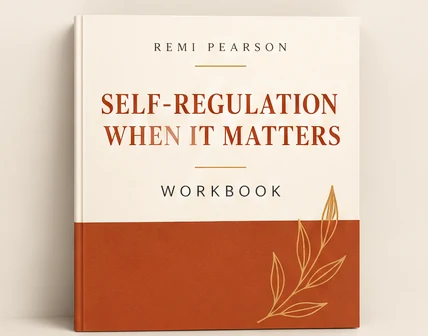
The Self-Regulation When It Matters workbook by Remi Pearson, cream with a rust band and a gold sprig

Your workbook

Use the workbook to connect the teaching with your own life. You’ll identify your early signals, record how you respond to the practices and build a plan you can refer to when thinking clearly feels harder.

Over time, those observations can help you become more specific about what supports you. A practice that helps in one situation may not be the right choice in another.

Remi Pearson on stage holding a microphone, in black and white

Your guided meditation

Returning to Steadiness brings the body-based practices into one guided experience you can revisit. It includes choices for keeping your eyes open, moving gently or pausing, so you can respond to how you’re actually feeling.

There’s no requirement to become completely relaxed. You’re exploring what helps you feel more present and able to choose.

Remi Pearson on stage holding a microphone, in black and white

A note from Remi

I’m Remi Pearson, author and founder of The Coaching Institute. Much of my work has explored the gap between understanding ourselves and being able to live that understanding when something matters.

It’s one thing to know you want to listen. It’s another to stay available when you feel criticised, misunderstood or afraid of what someone might say. I’ve designed this program to give you a manageable introduction to working with that experience through your body, with practices you can explore in your own time.

Understanding your response can help you take responsibility for it. You can recognise that a moment felt overwhelming and still care about how you treated someone, what needs repairing and what you want to practise next.

A few things you might be wondering

Is this for me if I shut down rather than get angry?
Yes. The program includes withdrawal, going blank and feeling disconnected, as well as defensiveness and urgency. Becoming very quiet can be just as difficult to navigate as becoming visibly upset.
What if I already understand why I react this way?
You can understand a response and still struggle with it in the moment. This program focuses on recognising your bodily signals and practising responses, so you have something to work with alongside that understanding.
Will this teach me to stay calm all the time?
No. You’ll still have emotions and encounter difficult situations. The aim is to build your capacity to notice what’s happening and respond more deliberately, including when you need to pause.
Is taking a break from a conversation avoidance?
A pause can be useful when you’re struggling to participate. The program explores how to communicate that need and make a clear arrangement to return. Settling yourself is one step; the issue may still need discussion or repair.
Do I need experience with meditation or body-based work?
No. The practices are introductory and guided. You can keep your eyes open, adjust your participation or stop if something feels uncomfortable.
Is this therapy?
This is an educational program for everyday situations. It doesn’t include individual therapy or ask you to revisit traumatic experiences. If overwhelm or disconnection is severe or persistent, individual support may be a more appropriate place to work with it.
What does the $29 include?
All five videos, the workbook and the guided meditation. It’s a self-paced program with one payment of AUD $29.


Give yourself another way to meet a difficult moment.

There will be conversations you don’t enjoy, situations you can’t control and days when you have less capacity than you’d like. You can begin learning your signals and discovering what helps you stay more available within those experiences.

Start with one familiar situation. Work through the videos, try the practices and build a plan you can return to.

Self-Regulation When It Matters With Remi Pearson

Five videos • Workbook • Guided meditation
AUD $29 • One payment

Coming soon