How do I sell without scripts, pressure or bullshit?
Where sales conversations break, and the fast start guide.
Go down this rabbit hole


Influence & enterprise · Consultative sales
How to know when you and a buyer are the right match.
Early in my career, I studied a number of sales methods that left me uncomfortable. They taught people to find a buyer's pain point, aggravate it, and then present the offer as relief. I could see how the techniques worked. I also knew I didn't want to have conversations with people that way.
That question stayed with me … how do you become highly skilled at sales while allowing the person you're speaking with to feel known, respected, and able to make a good decision? Ultimate Influence grew from my work on that question.
My view of consultative sales is fairly straightforward. We are seeking to understand whether we're in alignment. If we are, we should be able to do business together. If we're not, a good conversation will help us discover that too.
That sounds simple until you try to do it well. You need to understand what the person cares about, what they value, what they're seeking, and what they're prepared to do to achieve it. You also need to understand your own offer well enough to assess whether you can fulfil what they want. There is a difference between finding a point of connection and establishing a genuine match. A person can like you, enjoy the conversation, and still need something you cannot provide.
In consultative sales, the salesperson takes responsibility for curiosity. You ask, listen, reflect, test your understanding, and make a recommendation based on what you've learned. The buyer contributes their knowledge of their own situation. Neither of you has the whole picture at the start.
I don't think this makes the conversation passive. A skilled salesperson guides it, helps the buyer think through possibilities, and builds commitment where there is a match. The buyer remains free to disagree or decline. In fact, you need them to be able to tell you when you've misunderstood something. Otherwise, how would you know whether your recommendation is any good?
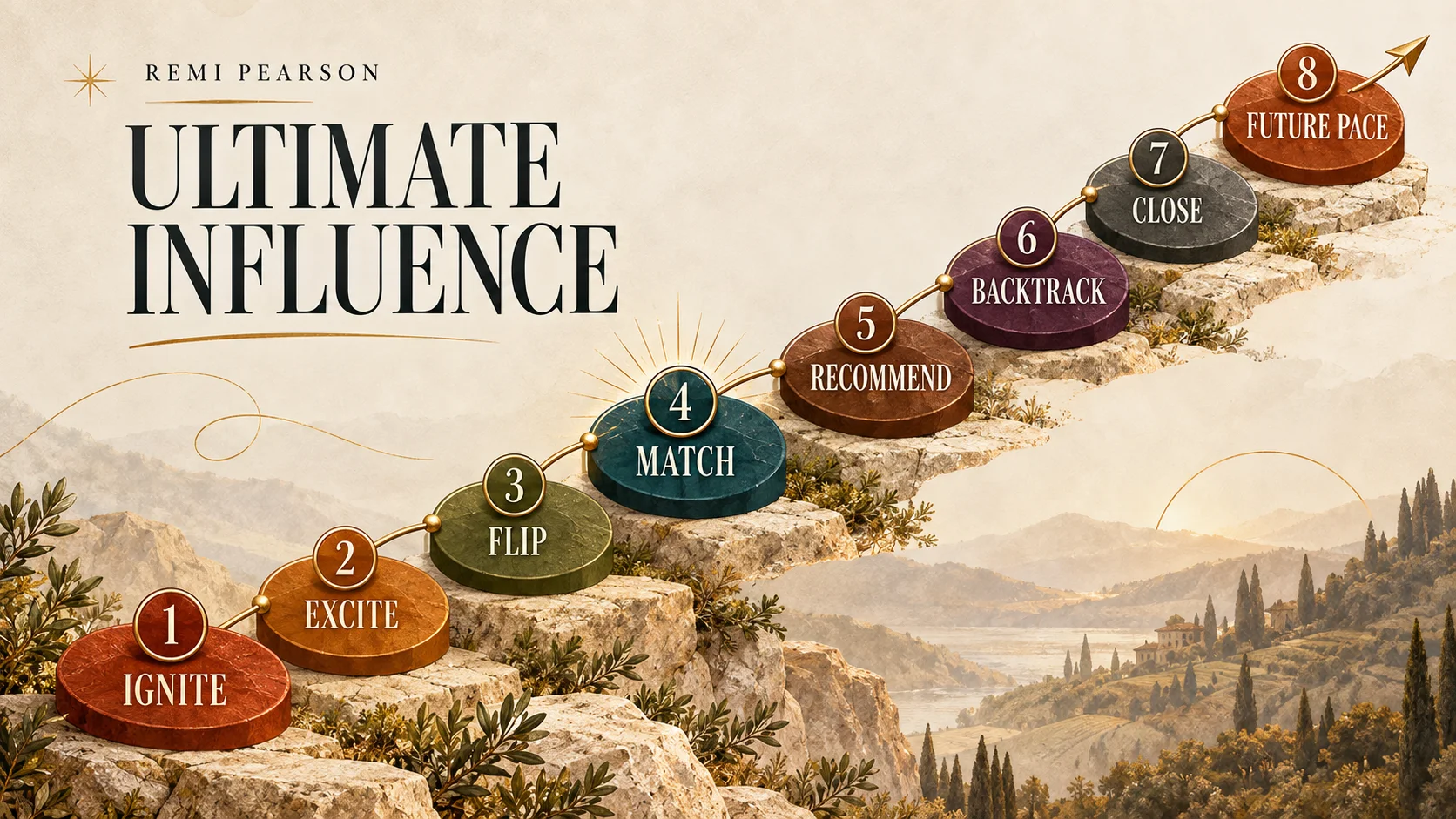
That is why I teach Ultimate Influence as an eight-step process. The steps give a conversation direction without requiring you to deliver a pitch at someone. They also give you a way to recognise when you've moved ahead before the other person is ready.
Ignite is about helping someone feel comfortable enough to have a real conversation. Pay attention to their tone and pace. Be relaxed, interested, and a little more understated than you might instinctively want to be. You don't need to impress them in the first minute. You need to establish that this is a conversation they can participate in.
Rapport is easy to mistake for a technique when it is written down. In practice, it shows up in whether you are responsive to the person in front of you. If they are reserved, charging in with enthusiasm may leave them further away from you. If they want to talk, give them room.
Before talking about your offer, learn something about the person and the future they are imagining. What do they care about in their work? Where do they want to go? What do they value about what they do? The answers begin to tell you what a good outcome would mean to them.
This is sometimes described as building the dream, although the dream must belong to them. You may hear someone say they want to grow a business, for example, and discover that what matters most is having more choice about how they spend their time. You would miss that if you stopped at the first answer and began explaining your program.
Your job here is to stay interested long enough to understand their meaning. Share an insight if it helps the conversation, but don't make it a speech about yourself.
Once you understand something about the person, you can gently turn toward the reason they're speaking with you. I call this Flip. You're connecting what matters to them with the possibility that you might be able to help.
The shift might be as simple as asking how the offer they're considering fits into what they've told you. Then listen. Let them explain why they've made the inquiry and what they hope might come of it. Reflect their words accurately, without improving them or translating them into your preferred sales language.
If the conversation becomes strained when you begin talking about the offer, that's useful information. You may need to go back and understand more. The steps aren't a staircase you must keep climbing regardless of what happens.
This is the most important part of the method. Match is where you examine the fit between the buyer's needs, values, desired outcomes, concerns, and circumstances, and what your offer can deliver.
I think of it as a careful gap analysis. What are they hoping to achieve? What would they need to do for the work to succeed? Does the way you deliver it suit their life or business? What concerns have they raised about time, money, support, or their previous experiences? You need to learn enough to make a recommendation you can stand behind.
In a workshop demonstration of Ultimate Influence, I used the example of someone looking at a real estate offer. Being near a golf course mattered to him because it was part of the future he imagined. It would have been easy to hear “golf course” as a property feature and move on. The conversation became more useful when we explored what it meant to him, alongside his concerns about the investment and the practical requirements. The offer had to match the life and outcome he was considering, not merely contain a feature that sounded relevant.
This is also where objections belong. A concern about cost, time, or whether something will work in a particular location may be entirely reasonable. You cannot resolve it by being more enthusiastic. You have to understand the concern and see whether there is a truthful answer.
When you have enough information, ask permission to make a recommendation. Keep it tentative enough that the buyer can correct you:
“I'm thinking this may be the best fit, based on what you've told me. How am I doing?”
Explain your reasoning in their terms. You might recommend the smaller option because it gives them the space to make use of it, even if they initially asked about the more advanced one. You might recommend a different route altogether. Their response will tell you whether you've understood them and what still needs discussing.
This is a small commitment in the conversation. You're putting forward a view, and the buyer is helping you test it. You haven't finished the assessment simply because they've responded positively.
Backtrack is the part of Ultimate Influence I particularly love. Many sales methods would move straight from a promising recommendation to closing. I want to go back through what we've learned first.
We revisit what the person told us mattered, what they wanted to achieve, the concerns they raised, and why we think this particular option fits. We ask whether we've missed anything. When we've listened well, they will often say yes as they hear their own priorities reflected back to them. Those yeses build commitment because the decision is becoming clearer. They also give the buyer repeated opportunities to say, “Actually, that isn't quite what I meant.”
For me, that is the point of backtracking. If we are a match, let's be confident about why. If we aren't, I'd rather discover it here than push ahead and leave someone with a decision that doesn't suit them.
A close needn't arrive as an abrupt change in tone. By this stage you've explored the fit, made a recommendation, and checked it together. You can ask whether they are ready to go ahead and, if they are, help them take the next step.
I still believe in asking for the business. Some people are so anxious about sounding pushy that they do all the work of a good consultation and then leave the decision hanging. Being direct is respectful when the buyer knows what they're agreeing to, has had their questions answered, and can say no.
If a concern appears at this point, take it seriously. It may reveal something you need to revisit in Match or Backtrack. The process is there to help you think, not to force a particular outcome.
After someone decides to proceed, they need clarity about what they've agreed to and what happens now. Future Pace connects the decision to the outcome they told you they wanted, while making the immediate next steps concrete. Who will contact them? What will they receive? When can they begin? What will they need to do?
This is part of the buying experience, and it should feel as considered as the conversation that led to it. Match their level of excitement rather than performing your own. The moment belongs to them.
The eight steps give salespeople a structure they can practise and improve. That matters for a founder leading a team, because you can identify where a conversation lost its way. Did the salesperson begin recommending before they understood the buyer? Did they hear a concern and treat it as resistance? Did they skip backtracking because a quick yes felt good?
The same structure is useful if you sell your own work. You can prepare thoroughly and still sound like yourself. In the workshop, I demonstrated the steps through live conversation and showed people how to return to an earlier step when the person they were speaking with wasn't ready to move forward. That's a more useful skill than memorising a perfect line and hoping someone responds as expected.
Sales mastery, to me, is being able to achieve good results repeatedly. You develop that capacity by getting better at understanding people and assessing the match, not by becoming better at delivering a speech. When you and the buyer can see clearly that what they want and what you offer belong together, doing business becomes a sensible next step.
If you want to learn the full Ultimate Influence method, including how to use the eight steps in your own sales conversations, explore the Ultimate Influence online training program.
Where sales conversations break, and the fast start guide.
Go down this rabbit holeUnderstanding what is driving your life before deciding where to take it.
Explore VATWhat deserves most of my attention?
Read on Talk to Remi