
How to Overcome Fear of Failure and Find the Courage to Live Fully
How courage works, how to build your capacity for uncertainty and how a meaningful purpose can carry you when confidence is nowhere to be found.
Imagine Sally sitting at her kitchen table on a Sunday evening, looking at the workshop invitation she still hasn’t sent. She has spent six months preparing. The slides are ready, the subject is something she cares deeply about, and several people have asked when they can book. She opens the invitation again and changes a sentence. Then another. What if someone asks a question she can’t answer? What if nobody comes? She closes the laptop, promising herself she’ll send it next weekend. Later, lying in bed, she realises that what hurts most is how much she wants to do it, and how tired she is of watching herself retreat.
You may recognise Sally’s experience, even if yours involves a different longing. Perhaps there is work you want to share or a version of your life you keep imagining without quite moving towards it. Understanding how to overcome fear of failure can help you take those desires seriously. We’ll explore how courage works, how to build your capacity for uncertainty and how a meaningful purpose can help carry you through the moments when confidence is nowhere to be found.
What Is Fear of Failure?
Fear of failure is the apprehension we feel when we imagine an unsuccessful outcome and what it might mean about us. Sometimes the concern is practical: losing money, damaging a relationship or making a decision that will be difficult to undo. Sometimes we are anticipating embarrassment, criticism or the painful feeling that we have disappointed ourselves.
Uncertainty means we cannot predict how things will unfold. Ambiguity adds another difficulty … the situation itself may be unclear, with information missing or several possible interpretations. Together, these experiences can leave us asking life for reassurance it cannot provide.
Susan Jeffers’s Feel the Fear and Do It Anyway challenges the assumption that confidence must arrive before action. Her approach recognises that unfamiliar experiences can bring fear, and that participating in them gives us opportunities to develop confidence (Jeffers, 2012). That matters because we can spend years trying to feel ready for something we can only learn by doing.
What Does Courage Mean When You’re Afraid?
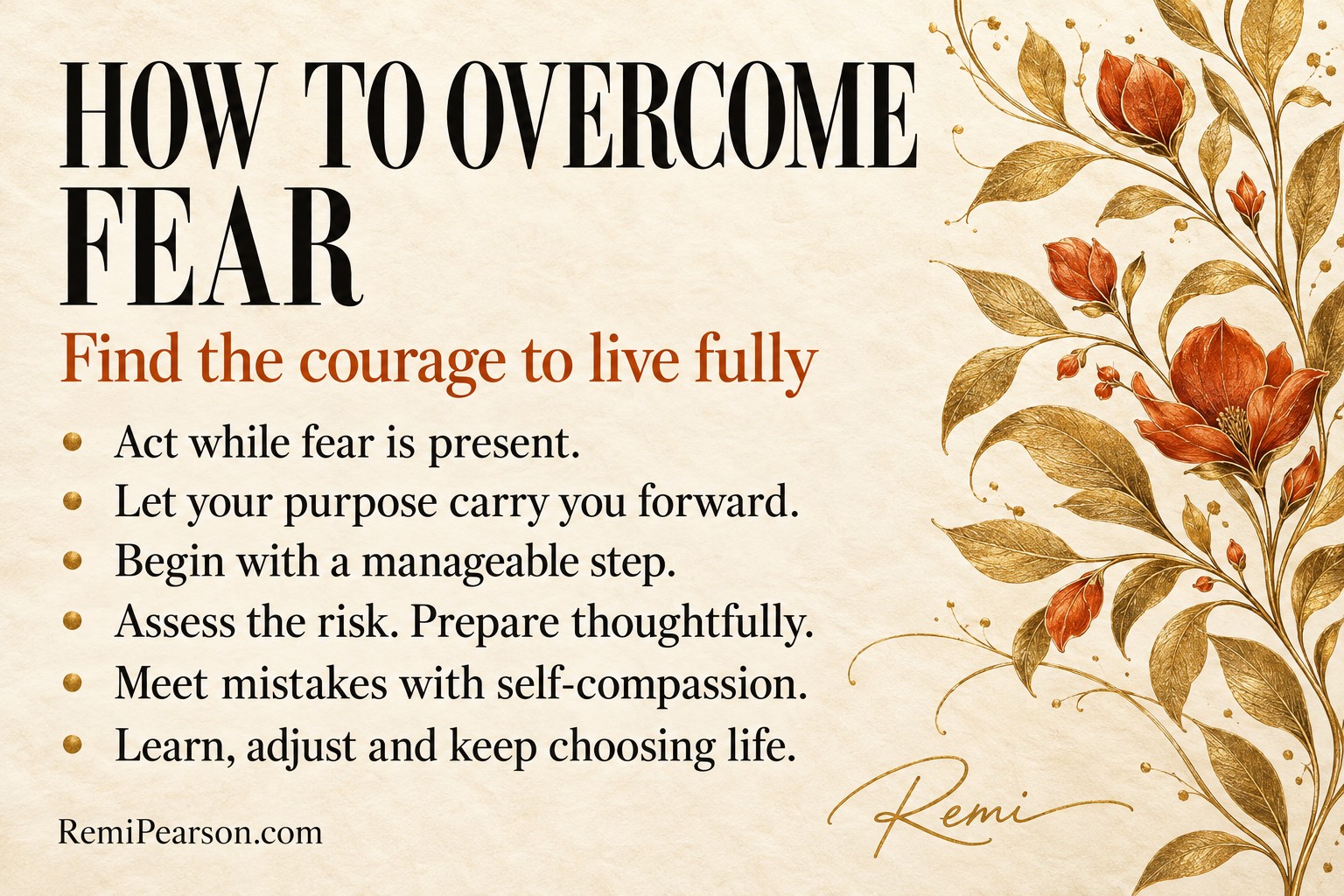
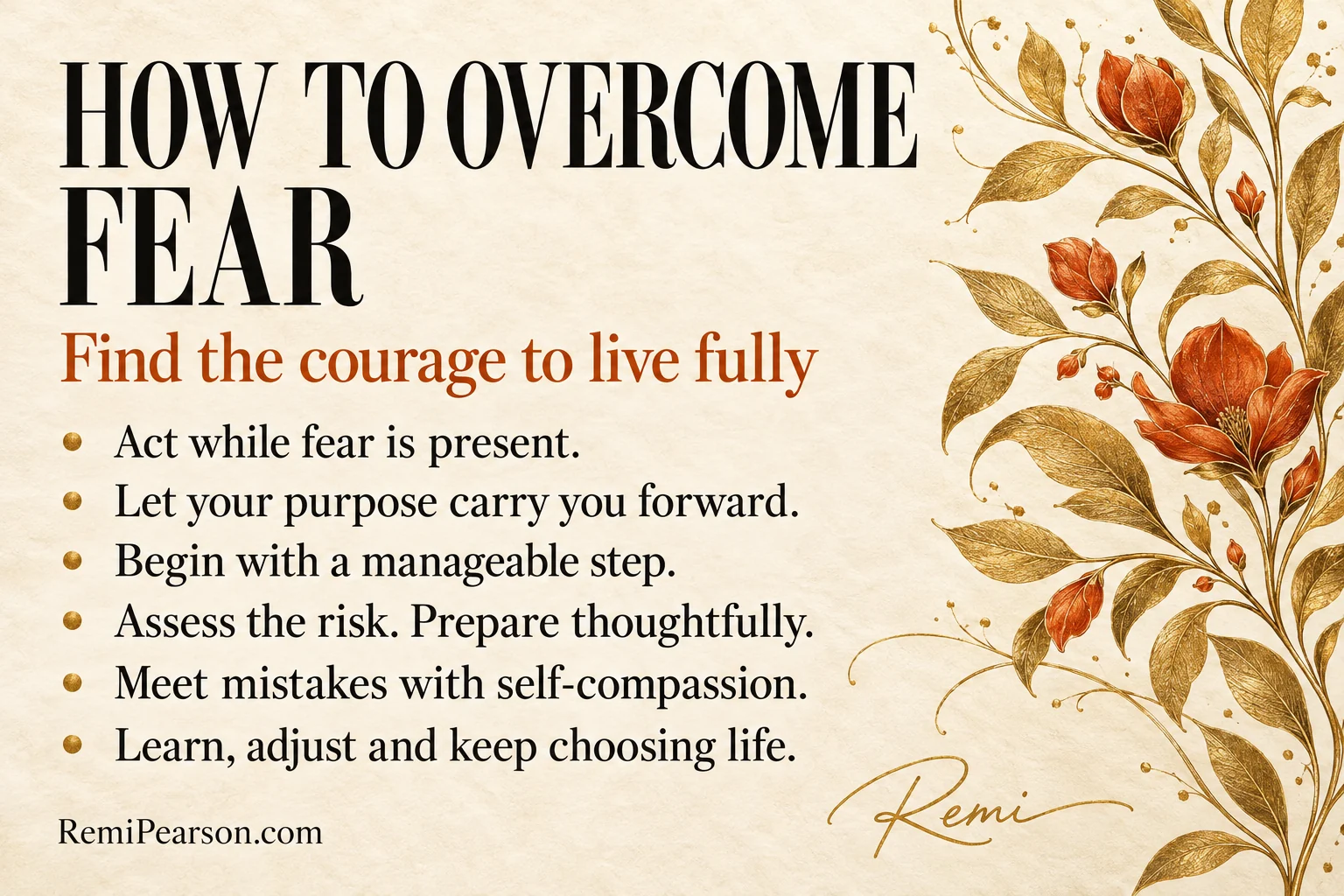
For the everyday challenges we’re exploring here, courage means choosing to act while fear is present. You may have a tight stomach when you send the application. Your voice may shake during the conversation. Neither experience cancels the courage involved.
We all have some experience of this, although we may overlook our own. Think of something you have faced that you would never have chosen. Perhaps you admitted a mistake or began again after a disappointment. You may remember how frightened you felt more clearly than you remember the fact that you continued.
In The Confidence Gap, Russ Harris encourages meaningful action alongside uncomfortable thoughts and feelings, rather than making their disappearance a requirement for participation (Harris, 2011). We can draw on that idea to recognise courage in ourselves before we feel particularly courageous.
Why Waiting for Fear to Disappear Can Cost You Your Life
There is a seductive promise in waiting: once I feel confident, I’ll begin. It sounds responsible, particularly when we have plenty of sensible reasons for another delay.
Sometimes more preparation is needed. But waiting can also become a way of keeping a possibility alive without ever encountering it. We can imagine the workshop going beautifully because we haven’t yet had to deliver it. We preserve the dream, while the years available to live it continue passing.
Jeffers draws attention to the ongoing fear and diminished sense of agency that can accompany avoidance (Jeffers, 2012). There is a personal cost here that reaches beyond missed opportunities. We may become increasingly distant from the life we wanted, accustomed to describing ourselves through intentions that never become experiences.
The image of dying with a song unsung is confronting because we understand it. There may be something we want to contribute, something we want to experience, that nobody else can choose for us. It deserves more than being postponed until fear gives us permission.
Let Your Purpose Help Carry You Forward
A meaningful purpose gives us a reason to tolerate the discomfort of trying. Without it, the immediate relief of retreat can be very persuasive.
Tony Robbins recommends identifying a compelling goal and considering both the life we might create by pursuing it and the consequences of never making the attempt (Robbins, n.d.). Harris similarly encourages clarifying our values so our actions have a direction we care about (Harris, 2011).
For Sally, the workshop might represent the opportunity to share something she has spent years learning. Remembering the people she hopes to help could give her a reason to send the invitation, even while she remains apprehensive about delivering the session.
Purpose does not guarantee an easy experience. In the darkest periods, we may need other people to help us remember what we care about. Still, it is worth asking whether the reason we want to move forward is substantial enough to hold our attention when fear becomes loud. What would make the effort worthwhile, even if the first attempt were imperfect?
An extraordinary life will mean something different to each of us. Mine might look nothing like yours. The useful question is whether your life feels inhabited by you … whether there is enough in it that lights you up and fills you, rather than an endless arrangement of obligations you have learned to endure.
Identify What You’re Actually Afraid Of
“I’m afraid of failing” can conceal several different concerns. Before trying to overcome it, ask what you imagine would happen.
Would you lose something you cannot afford? Would someone criticise you? Are you anticipating your own disappointment, or the shame of being seen trying and getting it wrong? Robbins recommends identifying fears specifically and examining the stories attached to them (Robbins, n.d.). Different concerns require different responses.
Brené Brown describes shame as the painful belief that something about us makes us unworthy of love and belonging (Brown, 2013). This helps explain why a mistake can feel far more threatening than its practical consequences suggest. We have attached our worth to the outcome.
Sally could have a difficult first workshop and still be a knowledgeable consultant with something useful to offer. If she interprets every awkward moment as evidence that she is fundamentally inadequate, it becomes much harder to examine what happened and improve it.
Build Your Capacity for Uncertainty Through Practice
Capacity means being able to stay engaged and respond when something feels difficult. We can develop it through challenges with stakes we can reasonably handle.
In a randomised trial involving 60 adults with generalised anxiety disorder, Dugas and colleagues tested a structured treatment using behavioural experiments to examine catastrophic beliefs about uncertainty. Participants improved compared with a waiting-list group, with gains maintained or increased during follow-up (Dugas et al., 2022). This was clinical treatment, although the principle suggests a useful everyday practice: compare what you predicted with what happened, including how you coped.
Sally might invite a small group to a pilot workshop, explain that she is testing the material and ask for specific feedback. She prepares properly and limits the commitment. Afterwards, she has experience of delivering the session and information about what needs improving.
Perhaps a question catches her off guard. She acknowledges that she needs to check the answer and follows up later. An experience she had imagined as humiliating becomes something she has handled. That is evidence she can draw on next time.
Assess the Risk and Prepare Thoughtfully
Courage needs judgment. Some mistakes have serious consequences, and fear can alert us to preparation we have overlooked.
Amy Edmondson’s Right Kind of Wrong distinguishes preventable errors from intelligent experiments in unfamiliar territory. Useful experiments have a meaningful purpose, draw on existing knowledge and are small enough to limit unnecessary harm (Edmondson, 2023).
Before acting, consider what you know and what remains uncertain. Look at the safeguards available and what you could afford to lose. A pilot workshop and a major financial commitment require different decisions. Having a purpose you care about does not remove the need to assess those differences.
Respond to Mistakes With Self-Compassion
How we treat ourselves afterwards influences how willing we are to try again. If every imperfect attempt brings days of self-punishment, beginning becomes an increasingly expensive emotional proposition.
Across four experiments, Breines and Chen found that self-compassion after setbacks increased several measures of motivation to improve. These included studying for longer after an initial failure and greater motivation to make amends for a transgression (Breines and Chen, 2012). An accepting response to ourselves can leave us more able to take responsibility and make changes.
You can acknowledge that something hurt. You can regret a decision without spending the next week prosecuting yourself for making it. Being disappointed is already difficult enough; it does not require a verdict on your entire character.
Learn From What Happened, Then Choose Your Next Step
An unsuccessful experience needs thoughtful review if we are going to learn from it. Edmondson’s work encourages examining what contributed and applying what we discover, rather than assuming failure automatically produces growth (Edmondson, 2023).
Ask what happened, whether anything needs repairing and what you would change. Sometimes the next step is another attempt. Sometimes the evidence tells you to change direction. Both decisions can involve courage.
Sally may finish her pilot with a page of improvements and a feeling of disappointment about one section. She may also remember someone staying afterwards to tell her that something finally made sense. Her experience is more complicated than the flawless success or public humiliation she had imagined. It is also more alive.
The invitation is sent. She has begun having an actual relationship with something she cares about. Whatever she chooses next, she will be choosing with experience, rather than spending another Sunday evening wondering whether she could.
Further resources
References
- Breines, J.G. and Chen, S. (2012). Self-compassion increases self-improvement motivation. Personality and Social Psychology Bulletin, 38(9), pp. 1133–1143. doi: 10.1177/0146167212445599.
- Brown, B. (2013). Shame vs. guilt. Brené Brown, 14 January. Available at: https://brenebrown.com/articles/2013/01/15/shame-v-guilt/ (Accessed: 5 October 2026).
- Dugas, M.J., Sexton, K.A., Hebert, E.A., Bouchard, S., Gouin, J.-P. and Shafran, R. (2022). Behavioral experiments for intolerance of uncertainty: A randomized clinical trial for adults with generalized anxiety disorder. Behavior Therapy, 53(6), pp. 1147–1160. doi: 10.1016/j.beth.2022.05.003.
- Edmondson, A.C. (2023). Right kind of wrong: The science of failing well. New York: Atria Books.
- Harris, R. (2011). The confidence gap. Boston: Trumpeter.
- Jeffers, S. (2012). Feel the fear and do it anyway. London: Vermilion.
- Robbins, T. (n.d.). How to overcome fear. Tony Robbins. Available at: https://www.tonyrobbins.com/de/blog/overcoming-fear-in-5-steps (Accessed: 5 October 2026).
 Talk to Remi