


Why does loving someone
bring all my shit
to the surface?

Relationships have an extraordinary talent for finding the parts of us we thought we had dealt with. The closer someone becomes, the harder our attachment strategies work to protect us.


What happens to you
when it really matters?
Because we are rarely at our most rational
when connection feels threatened.
You silence what you need to protect the connection.
Their comfort becomes more important than your truth.
Eventually, you can no longer find yourself in the relationship.
- What I do
- I soften my opinions, hold back my needs and agree to things that don’t feel right to me.
- What I fear
- If I tell the truth, I might upset them or lose the connection.
- How it protected me
- Staying agreeable may once have helped me remain close to someone whose love felt uncertain.
- What can change
- I can begin saying what is true for me in small moments, and learn that connection can make room for both of us.
A delayed reply or a change in tone can set off alarm.
You search for clues about what has gone wrong.
The fear can become so loud that it is hard to hear anything else.
- What I do
- I check for messages, seek reassurance or try to close the distance immediately.
- What I fear
- They are losing interest, leaving me or deciding I no longer matter.
- How it protected me
- Staying alert to changes in closeness may have helped me prepare for separation before it happened.
- What can change
- I can recognise the alarm, ask directly for clarity when I need it and give myself support while I wait.
You feel drawn to someone who offers glimpses of closeness but rarely stays present.
You work harder for a connection that never quite settles.
The longing becomes familiar, even when it hurts.
- What I do
- I invest in someone’s potential and keep trying to earn the closeness I want.
- What I fear
- Being fully seen, depending on someone, or discovering that a genuinely available relationship feels unfamiliar.
- How it protected me
- Wanting someone at a distance allowed me to pursue connection without having to trust it completely.
- What can change
- I can notice what availability actually looks like, and pay attention to how I feel with someone consistently present.
When feelings intensify, you go quiet or retreat into your head.
The other person may want to get closer just as you need space.
Neither of you can easily reach the other from there.
- What I do
- I withdraw, change the subject, become practical or say I’m fine when I’m not.
- What I fear
- Being overwhelmed, losing control or having feelings I won’t know how to manage.
- How it protected me
- Pulling back gave me a way to cope when emotional situations felt too intense or unsupported.
- What can change
- I can ask for a pause without disappearing, then return when I have enough space to speak honestly.
You notice what needs doing and take responsibility for keeping things together.
You may struggle to ask for help, then feel hurt that none arrives.
Love starts to feel like work you are doing alone.
- What I do
- I anticipate needs, organise everything and take on more than I want to carry.
- What I fear
- If I stop, things will fall apart or I’ll discover the other person won’t show up for me.
- How it protected me
- Taking charge may have given me a sense of security when relying on others felt uncertain.
- What can change
- I can say what I need, share responsibility openly and notice whether the other person is willing to meet me there.
A disagreement can feel much bigger than the issue itself.
Your body reacts as though the bond is in danger.
It becomes difficult to stay curious about what the other person means.
- What I do
- I rush to fix things, defend myself, appease them or assume the worst.
- What I fear
- This disagreement means they will stop loving me or leave.
- How it protected me
- Treating conflict as urgent may have helped me respond quickly when disconnection once had real consequences.
- What can change
- I can slow the conversation down, name what I’m feeling and learn that disagreement can be followed by repair.
Love doesn’t create all your patterns.
It gives them somewhere to show up.
When connection feels threatened, intelligent people can behave in ways that make no sense to them later. Pursuing, withdrawing, fixing, pleasing and controlling are attempts to protect the bond, the self, or both.
Knowing your attachment style does not automatically change what happens when attachment is activated.
The relationship changes
when you can remain with yourself
The work is not becoming endlessly calm.
It is noticing the moment you begin to leave yourself and creating another choice.
- CatchNotice your Point of Departure
- StayRemain present with the discomfort
- ChooseRespond without abandoning yourself
- Hold space without rescuing
- Keep a boundary without punishing
- Express a need without demanding
- Let somebody have feelings without making them your fault
Not perfect. Just more honest and more capable.
- Recognise the cycle earlier
- Stay connected during discomfort
- Ask rather than assume
- Make boundaries clear
- Repair after rupture
- Take responsibility without taking all the blame

The five paths to your
healthy relationship
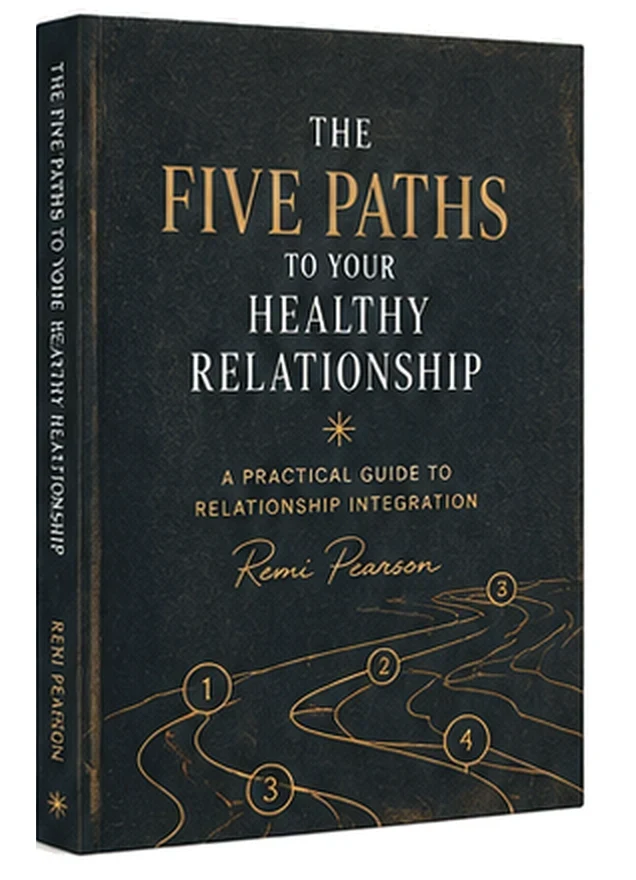
AUD $29
A clear, practical guide to creating relationships that are more honest, secure and capable of repair.
- Stay connected to yourself
- Recognise the attachment cycle
- Communicate needs and boundaries
- Repair after rupture
- Create emotional safety together
Learn in your own time. No classes. No calls. No weekly obligation.
Conversations worth having

Because none of this happens in isolation

I’ll write when I have something worth saying
Thoughtful ideas, new conversations and the occasional invitation.
 Talk to Remi